


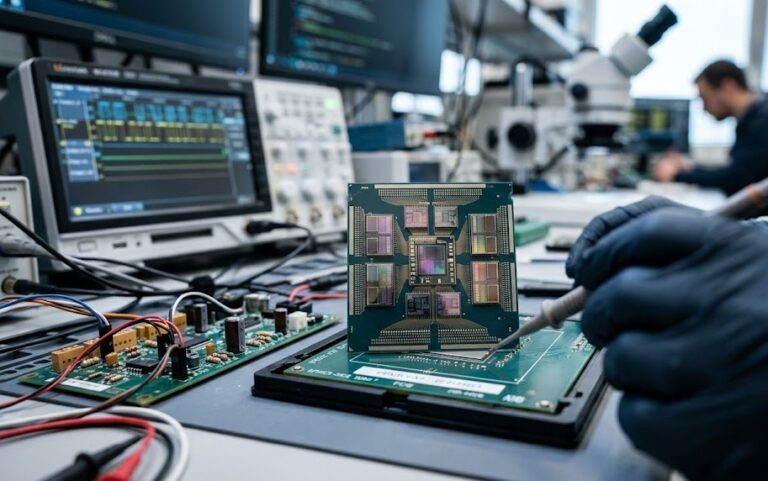
HALOSUMUT NOW – Chiplet processor architecture is rapidly becoming one of the most significant innovations in the semiconductor industry, offering a smarter approach to building high-performance processors for modern computing. Instead of manufacturing a processor as a single large chip, chiplet technology combines multiple smaller chips into one integrated package, improving efficiency, flexibility, and production yields.
As demand continues growing for artificial intelligence, cloud computing, gaming, and data-intensive applications, chiplet-based processors are enabling manufacturers to deliver higher performance while reducing manufacturing complexity and development costs.
Technology analysts believe chiplet architecture will play a central role in shaping the next generation of CPUs, GPUs, and AI accelerators as semiconductor companies seek alternatives to traditional monolithic chip designs.
Smaller Chip Designs Deliver Greater Efficiency
Traditional processors are built using a single silicon die that integrates every computing component into one package. As chips become increasingly complex, manufacturing larger dies becomes more expensive and susceptible to production defects.
Chiplet architecture addresses this challenge by dividing processor functions into multiple specialized chiplets that communicate through high-speed interconnect technologies. This modular design improves manufacturing yields while allowing companies to replace or upgrade individual components without redesigning an entire processor.
The result is a more efficient production process capable of supporting increasingly sophisticated computing workloads.
AI and High-Performance Computing Benefit from Chiplet Technology
Artificial intelligence and high-performance computing require enormous processing power alongside efficient data movement between computing components.
Chiplet processors allow manufacturers to combine specialized CPU cores, GPU units, AI accelerators, memory controllers, and input/output modules within a single processor package. This modular architecture improves workload distribution while enabling better optimization for machine learning, scientific computing, and large-scale enterprise applications.
As AI models continue increasing in size and complexity, chiplet-based processors are expected to provide greater scalability for future computing platforms.
Improved Manufacturing Flexibility Reduces Costs
One of the biggest advantages of chiplet architecture is manufacturing flexibility.
Instead of producing one massive processor die, semiconductor companies can manufacture smaller chiplets separately, often using different process technologies optimized for specific functions. These chiplets are then assembled into a unified processor package through advanced packaging techniques.
This approach reduces production risks, improves wafer utilization, and helps manufacturers control costs while accelerating product development.
It also enables faster innovation by allowing new processor generations to reuse proven chiplet designs alongside newly developed components.
Energy Efficiency Supports Sustainable Computing
Power efficiency has become a major priority as data centers, AI platforms, and enterprise computing systems continue expanding.
Chiplet processors improve energy efficiency by optimizing communication between specialized computing modules while reducing unnecessary power consumption. Better thermal management also allows processors to maintain high performance under demanding workloads without generating excessive heat.
These advantages make chiplet architecture particularly attractive for cloud providers, supercomputing facilities, and organizations pursuing more sustainable computing infrastructure.
Semiconductor Innovation Continues Accelerating
Leading semiconductor manufacturers are investing heavily in advanced packaging technologies that support chiplet-based processor development.
Industry standards for chiplet interoperability are also evolving, enabling broader collaboration across hardware ecosystems. This could allow future processors to combine components from different manufacturers, creating more flexible and customizable computing solutions.
As packaging technology matures, chiplet architecture is expected to become increasingly common across consumer devices, enterprise servers, gaming hardware, and AI infrastructure.
A New Foundation for Future Processor Development
The semiconductor industry is approaching physical limits in traditional chip scaling, encouraging companies to explore new architectural approaches that improve performance without relying solely on smaller transistors.
Chiplet processor architecture provides a practical path forward by combining modular engineering with advanced packaging, allowing manufacturers to continue increasing computing capability while improving manufacturing efficiency.
As artificial intelligence, cloud computing, edge computing, and advanced digital services continue driving demand for greater processing power, chiplet technology is expected to become one of the defining innovations supporting the future of modern computing.
The rapid adoption of generative AI, large language models, and high-performance cloud services is increasing the need for processors capable of handling complex parallel workloads. Chiplet architecture enables hardware designers to integrate dedicated AI engines, graphics processors, networking interfaces, and memory technologies into a single package, delivering higher overall system performance without dramatically increasing manufacturing complexity.
Advancements in 2.5D and 3D chip packaging technologies are further expanding the potential of chiplet-based designs. These packaging methods improve communication speeds between chiplets while reducing latency and enhancing bandwidth, making them especially valuable for data centers, scientific research, and AI training environments where rapid data exchange is essential.
Looking ahead, industry experts expect chiplet architecture to become a standard design approach across a wide range of computing platforms. Combined with innovations in artificial intelligence, advanced semiconductor manufacturing, and next-generation interconnect technologies, chiplet processors are poised to play a critical role in powering future consumer electronics, enterprise infrastructure, autonomous systems, and cloud-native computing environments.
